
New York City’s Canal Street makes for perfect moral theater. Poor street vendors selling legally questionable merchandise, shoppers and tourists buying knockoff designer handbags for pennies off folding tables, multibillion-dollar luxury corporations hiring lawyers to take on local governments and their beloved politicians. It’s a sociopolitical environment that’s rife with complexities and contradictions. And it’s reaching a climax that’s about to get hairier and pricklier.
The global luxury industry has escalated its efforts to crack down on counterfeits. And its latest target is New York City’s infamous Canal Street. A coalition of major fashion and jewelry houses has gone to federal court over the counterfeit market associated with Canal Street, and it’s likely to lead to a confrontation with NYC’s newly elected star mayor, Zohran Mamdani. On paper, the legal case is not against the City of New York or Mamdani himself, but rather unnamed alleged counterfeit sellers and companies. Politically, though, this reads like something much messier: an aggressive pressure campaign against a metropolitan city government that has not made Canal Street enforcement the kind of priority Big Luxury would apparently prefer.

But here’s the catch: the fake bags are just the tip of this iceberg. This isn’t just about lost revenue – it’s about how the power struggle between corporate interests and a city government will reveal the real performance: watching every side explain, with a straight face, why protecting its own interests is actually a matter of sacred ‘principle’.
Luxury brands will have to explain how their language of “inclusion”, “equality”, “creativity”, “community”, and “social responsibility” suddenly coexists with seizure orders, private investigations, and enforcement pressure when the wrong people touch the logo. Mamdani will have to prove whether his defense of immigrant vendors and working-class New Yorkers survives the complications of actually governing a city where illegal economies exist in plain sight. Consumers will have to explain why buying fake status symbols somehow counts as anti-luxury rebellion. Fashion media will have to decide whether to call this what it is or massage it into another tasteful paragraph about “brand protection.”
This lawsuit will call everybody’s moral bluff. And there are no winners. Let’s dig in.
Luxury Giants Are Angry. And They’re Going In Hard.
The public-facing version of the story is simple enough: luxury brands are angry about counterfeits on Canal Street. But the details hiding just under the surface are much meatier (and juicier).
The industry has filed many complaints against Canal Street in the past, almost on a yearly basis. The latest legal action is a trademark-infringement case – Burberry Limited et al. v. Various John Does, Jane Does, and XYZ Companies – filed in the Southern District of New York. The plaintiff list is a hefty docket of the luxury world’s biggest names, including Burberry, Cartier North America/Richemont, Chanel, Christian Dior Couture, Fendi, Gucci America, Hermès, Jimmy Choo, Louis Vuitton Malletier, Michael Kors, Parfums Christian Dior, PRL USA Holdings, Richemont International, and Yves Saint Laurent. In other words: a luxury Avengers team assembled to defend the sanctity of their precious logos. This is part of a broader years-long legal pattern: luxury brands repeatedly filing “John Doe/Jane Doe/XYZ Companies” counterfeit lawsuits, often using emergency TROs, seizure orders, expedited discovery, and preliminary injunctions.
Not only that, but a very authoritative rumor has it that these luxury brands jointly commissioned a private investigator to conduct a covert operation on Canal Street beginning last July, with the operations extending several times until November. That means this is not just brands whining to NYPD. It is brands funding their own intelligence operation, then turning that intelligence into a federal civil-enforcement weapon. Apparently, the investigation uncovered an extensive counterfeiting network, full with hire-car delivery systems and secret stockrooms hidden behind false walls inside storefronts. The sheer aggression of this campaign is insane.

Initially sealed, the public docket later revealed a host of anti-counterfeit measures that make this more than another routine complaint: restraining orders, seizure orders, substitute custodian orders, expedited discovery orders, and an order to show cause. Most of this is governed by the Lanham Act, which courts can use to authorize seizures in counterfeit-mark cases, including the seizure of goods, counterfeit marks, the means of making those marks, and related records, when the statutory conditions are met.
This is the unglamorous machinery behind the luxury fantasy: sealed filings, evidentiary declarations, bonds, custodians, service affidavits, and the gears of federal trademark law. Behind the runway glitz and the leggy supermodels is a corporate lawyer asking a federal judge to authorize a seizure.
But it’s not just the brand list that’s juicy. It’s also where the legal papers were served: places like 237 West 37th Street, Room 903; 43 West 29th Street, Second Floor, also known as Golden Star Corp.; and 35 West 31st Street, First Floor, including a mezzanine. These addresses are not the quirky shopfronts of Canal Street. They are storage, supply, logistics, and administration facilities.
Instead of targeting shopfront vendors, Big Luxury appears to be coming for the backstage infrastructure of the counterfeit market. And that is where the moral theater takes center stage.


Big Luxury Isn’t Just After Fake Bags
Let’s start with the obvious villain, because the luxury industry has done itself no favors. And nothing says it more clearly than the hypocrisy of the industry’s ‘corporate speak’.
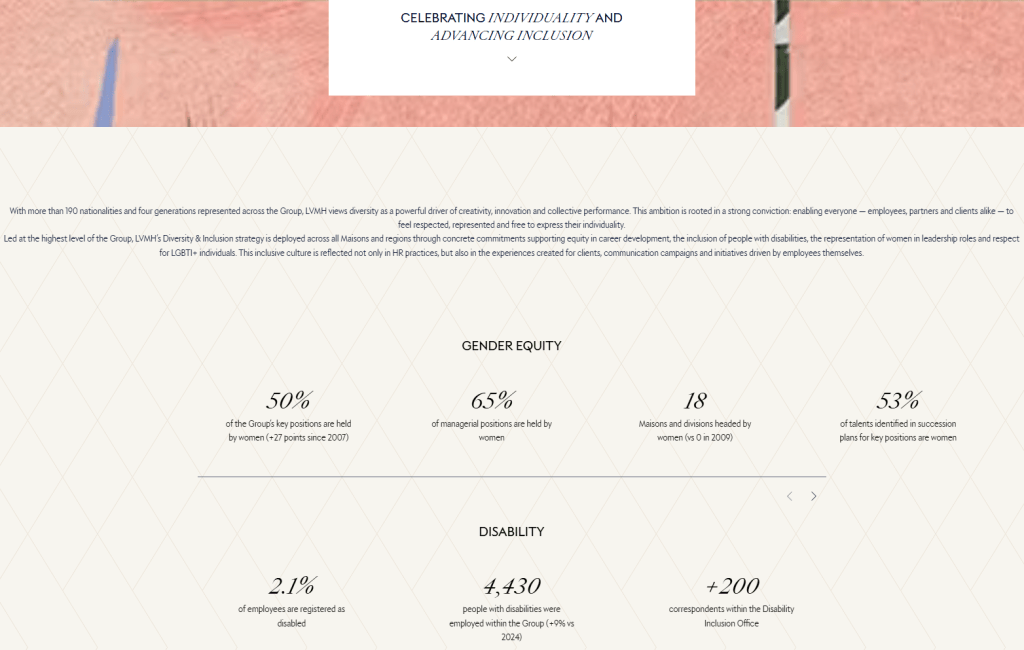
Major brands have preached loudly and proudly about “inclusion” for decades. Their official sites are crammed with every other populist buzzword they can get their hands on. Here’s just a small sample: Burberry says diversity, equity, and inclusion are “deeply embedded” in its ways of working and says its commitments extend beyond the company to underrepresented communities, representative campaigns, and a culture of belonging. Chanel says it denounces racism, discrimination, and violence; stands in solidarity with communities experiencing racism; and supports grassroots racial-justice organizations. LVMH says its diversity and inclusion strategy supports equity in career development, disability inclusion, women in leadership, respect for LGBTI+ individuals, and inclusive client experiences. Ralph Lauren says it fosters a culture of “Belonging & Equity” and believes inclusivity, diverse backgrounds, open dialogue, and amplified perspectives drive creativity. It also, hilariously, lists Deirdre Tejada as “Head of Global Belonging, Equity & Philanthropy and Head of Global Asset Protection.”
I mean come on. The jokes write themselves: belonging in one hand, asset protection in the other. Corporate drivel at its best.
To be clear, none of this means luxury brands are legally wrong to protect trademarks. Counterfeiting is illegal. Intellectual property matters. Craft matters. Consumers can be deceived. Supply chains can be exploitative. The counterfeit economy is not automatically noble because it sells to people who cannot afford the real thing.

The problem for Big Luxury is that Canal Street appropriates the industry’s symbolic power. A monogram is not just a monogram. A logo is not just a logo. A quilted flap is not just a handbag. These are all social codes that signal who possesses status and prestige in society. The luxury industry derives its value from carefully controlling every aspect of their codes: who gets to own them (high prices); who gets to wear them (those with wealth and/or power); how often they appear (scarcity and limited production); and under what conditions they circulate (handpicked retail stores). This precise control helps brands cultivate the prestige necessary to justify their bizarre prices.
Canal Street weakens that control. The counterfeit market allows basically anyone to possess these status symbols. Anyone can now appear ‘powerful’. And if everyone is powerful…then no one is powerful. And that waters down the status and desirability of a brand.
That is the humiliation.
Luxury is not simply protecting sales. The person buying a fake Birkin bag on Canal Street was probably not moments away from spending five figures at Hermès. Luxury is protecting legitimacy. It is protecting its ability to gatekeep that carefully constructed social meaning that allows it to charge such high prices. It is protecting the abstract code that allows an object to be read as status rather than merely stuff (reminds me of a scene from a certain corny chick-flick).
So yes, the brands can talk about “diversity”. They can talk about “equity”. They can talk about creativity and craft. And they can be correct on intellectual property law. But they should also talk about how their business models are totally incongruent with those values.
The contradiction is not that an inclusive luxury company must tolerate counterfeiting – that would be ridiculous. The contradiction is that luxury wants the moral glow of universal belonging while selling a fantasy whose value depends on controlled access, scarcity, and exclusion.
Mamdani Has Made His Bed
Mamdani’s problem is not that the luxury brands are sympathetic. They are not. His problem is that he’s already positioned himself as a moral authority over how the counterfeit market should be enforced.
The October 2025 Canal Street raid made this terrain radioactive long before the current lawsuit even became public. After federal agents carried out a counterfeit-goods and immigration enforcement sweep in which vendors, including U.S. citizens, said they were harassed, questioned about their status, and pressed to show papers, Mamdani — then a mayoral candidate — called it an “aggressive and reckless raid on immigrant street vendors” and accused the Trump administration of choosing “authoritarian theatrics” that create fear, not safety.
That judgment call now follows him into government.
If Mamdani cooperates with enforcement that looks like a municipal version of that same spectacle — even without ICE, even with cleaner messaging, even with luxury’s fingerprints politely wiped from the press release — he risks going back on his word for folding to a multibillion-dollar industry.
But if he does nothing, the attack writes itself: Mamdani lets organized counterfeit networks operate in the open because progressive governance cannot bring itself to enforce the law. The Right will say it. Business groups will say it. Tabloids will say it. Some residents and legitimate businesses may say it too.
This is where slogans go to die.
Protecting immigrant vendors sounds morally valiant until the market being protected includes illegal goods, blocked sidewalks, possible supply networks, and workers who may themselves be vulnerable to exploitation. On the other hand, enforcing the law sounds heroic until the people being visibly chased, questioned, or arrested are poor, immigrant, Black, brown, or trying to survive in a city that prioritizes luxury bags over their survival.
If there is a politically viable strategy for Mamdani, it’s to split the problem apart: protect vulnerable vendors from immigration terror and police spectacle, while targeting the deeper networks that profit from putting those vendors on the front line. Easier said than done, of course.
But that is exactly why this is a test.
The Vendors Aren’t Saints By Default Either
No one’s safe here. The laziest version of the story turns street vendors into either criminals or folk heroes.
Both versions ignore context and nuance.
Some vendors are almost certainly people trying to survive. New York is expensive, licensing is difficult, and informal economies exist because formal economies are expensive, slow, exclusionary, or impossible to enter. It is not hard to feel more sympathy for the man selling counterfeit bags to feed his vulnerable family than for a luxury conglomerate guarding its precious handbags that it has marked up into absurdity.

But survival does not automatically exonerate the counterfeit market. The visible vendor may be vulnerable and still be part of a larger exploitative structure. The person holding the bag may not be the person making the money. Informal labor can be real labor. It can also be disposable labor.
That is the part many people, both conservative and progressive, prefer to blur. It is more morally expedient to defend “poor vendors” as a category than it is to dig deeper and question who supplies those vendors, who profits above them, who absorbs the legal risk, and who vanishes when the raid comes. That adds pesky nuance that makes the problem harder to solve.

But society doesn’t get to collectively sidestep these moral complexities when convenient for it.
Because these counterfeit networks are not Robin Hood with better accessories. And no they aren’t “democratizing” beauty. Canal Street’s counterfeit market is imitating an industry that already itself exploits people’s desire for status, wealth, and proximity to affluence. The counterfeit market does not liberate that desire. It feeds on it from the other end. It overpromises those things even more.
Maybe if we were talking about lifesaving drugs, one could make a real argument that illegal imitation serves some higher moral purpose. But fake luxury bags are not insulin. There is no great humanitarian nobility in selling people a counterfeit symbol of wealth. It’s a market that exploits the consumer’s hunger for status, the vendor’s economic vulnerability, and the public’s instinctive sympathy for the underdog.
So no, the answer may not be to send an armored vehicle over a fake Chanel. But the answer is also not to pretend Canal Street’s economy is innocent.
Consumers Are Luxury’s Cheapest Believers
Then there are the shoppers – perhaps the funniest hypocrites in the room.
Fake-bag buyers will have every excuse under the sun to allay their consciences for perpetuating the counterfeit market. They’ll usually start with “Luxury is overpriced” – true. Then there’s “Brands are greedy” – often also true. But I draw the line when it crosses into delusion, with rhetoric like “Counterfeits are an anti-luxury statement.” This is laughable, at best. Again, there is nothing honorable about the luxury counterfeit industry. It exploits both vulnerable vendors and consumers.
Buyers are not rejecting luxury. They are literally turning to the luxury black market to acquire it, which ironically reinforces its value – not undermines it. And that’s totally fine. Nobody can force you to stop desiring what’s designed to be desirable. Just don’t kid yourself into believing that buying knockoffs is some form of ‘rebellion’ or ‘anti-capitalist statement’.

This is the great comedy of dupe culture. Buyers often claim to be above the system, but they’re simply swapping one system for another. Because they still want the Birkin shape, the Chanel quilting, the LV monogram, the Cartier code, the Dior logo.
That is not anti-luxury. In fact, it’s extremely pro-luxury.
The success of luxury counterfeit economies proves that, ultimately, brands won at the deepest level. Their symbols are so powerful that even resentment takes the form of imitation. The public may hate the price. They may mock the quality decline. They may roll their eyes at boutique snobbery. But they still recognize the code, they still want to possess the code, and they still want the world to see that they possess the code.
Fashion Media Will Probably Play Dumb. Again.
Fashion media will have its own test. It is, after all, not some objective observer peering at the industry from a clean distance. Powerful fashion media, like Vogue and WWD, live inside luxury’s ecosystem. It depends on access, advertising relationships, showroom proximity, runway invitations, designer interviews, market previews, gifted intimacy, and the soft narcotic of being near power.
That does not mean every outlet is a brand mouthpiece. That would be too easy, and also not true. Some fashion reporting on counterfeits is serious, careful, and useful. But the framing still matters, especially when the same media class that knows how to detect the faintest shift in a hemline suddenly becomes strangely literal when money, law, class, immigration, and luxury’s social power collide.
Fashion media has covered counterfeit markets before, and the pattern is revealing. Vogue turned The RealReal’s Canal Street fake-bag installation into a glossy cocktail-party story, where the grubby problem of counterfeit luxury became a convenient conversation about authenticity with lighting, guests, and brand-safe irony. In “Why I Decided to Stop Wearing ‘Funny Fakes,’” Vogue framed bootleg fashion as cheeky personal-style fun before eventually arriving at the darker labor, crime, and environmental realities underneath. Vogue Business has treated counterfeits and dupes through more managerial frames, from resale authentication and whether luxury can “wipe out counterfeits”, to Gen Z’s love of dupes, to an executive guide on how brands should respond. Business of Fashion, meanwhile, often takes the harder business line, treating counterfeits as an escalating authentication, technology, and brand-protection crisis, while WWD has covered Canal Street through the industry-color lens, including Diesel’s intentionally misspelled “Deisel” fake-store stunt, a reminder that brands can cosplay counterfeit culture as clever commentary while actual street vendors face raids.
That is the test for fashion media now.
The issue is not that fashion media has never discussed the harms of counterfeiting. It has. The issue is that it often handles counterfeiting through frames that comply with the industry: authenticity, taste, consumer trust, brand integrity, trend behavior, resale risk, ironic style, or market strategy. Those frames are not useless. But they are incomplete and they conveniently dodge uncomfortable truths that may alienate them from luxury houses and advertisers. They flatten the ethical mess of the counterfeit economy into a shopping problem or a content problem – to protect their own interests while still giving the illusion of ‘criticism’.
But Canal Street needs clearer framing.
It is a place where luxury’s symbolic power, immigrant labor, federal enforcement, local politics, consumer desire, public order, and class anxiety all meet on the same sidewalk. That is much harder to package than a fake-bag trend story.


So, how will industry media paint it this time? Will this lawsuit be covered as a class conflict? A trademark dispute? A public-order question? An immigration story? A labor story? A luxury-aura crisis? Or will it be flattened into the usual digestible formats: fake-bag drama, dupe discourse, resale anxiety, downtown color, brand-protection update, quirky New York tale? However Vogue, WWD, and BoF decide to portray it, it will be within a safe distance that will probably not challenge the status quo.
So What’s The Real Scandal Here?
Globally, counterfeiting is not some tiny little nuisance. In May 2025, the OECD and EUIPO estimated that global trade in counterfeit goods reached $467 billion in 2021, while warning about risks to consumer safety, intellectual property, and legitimate commerce.
So the point is not that counterfeiting is harmless. It is not. The point is that luxury’s outrage over counterfeiting always wants to be treated as morally cleaner than it is.
Canal Street embarrasses luxury because it reveals how much of luxury’s power lives not in the object itself, but in the social agreement around the object. The real handbag and the fake handbag may be materially different, legally different, and ethically different. But the panic begins because they are symbolically adjacent enough to cause trouble.
A fake bag is not just a copy. It is an insult to the industry’s control over status symbols and the billions of dollars they spend doing so.
That is why this lawsuit matters beyond one street. It peels back the veil of cliche corporate speak, political grandstanding, and consumer ignorance. It turns brand equity into a civic question. It forces a progressive mayor to decide whether illegal markets are always sympathetic when the law being enforced happens to benefit the rich. It forces consumers to admit they do not hate luxury as much as they hate being priced out of it. And it forces fashion media to tow the line between independent journalism and corporate compliance.
Everyone will try to leave this story with clean hands.

Luxury will call its position creativity, craft, and intellectual property. Politicians will call theirs ‘public interest’. Vendors will call theirs survival. Consumers will call theirs rebellion. Law enforcement will call theirs order. Fashion media will call theirs ‘nuance’. Every side will try to turn self-interest into principle, and every side will insist that its own motives are the noble ones.
But Canal Street is not giving anyone that gift.
The fake bags are not the real scandal. They are the prop. The scandal is how quickly every party involved will dress up its own political interest as virtue: profit as creativity, enforcement as justice, survival as innocence, consumption as resistance, access journalism as sophistication, and public order as moral clarity.
That is what makes Canal Street such perfect moral theater. Nobody is simply lying. Everyone has a point. Counterfeiting is illegal. Luxury is exclusionary. Vendors may be vulnerable. Consumers are complicit. Residents deserve order. Politicians have to govern. Media has to frame the story somehow.
And still, somehow, everyone is performing.
The fake bag sits there on the folding table, tacky and obvious and legally doomed, while everyone around it insists that they’re the real victim.
Sure.


