
A friend said something to me recently that I’ve heard at least ten times over the past year: “You can always spot the MAGA girls,” she said “They all dress the same.”
I wanted to roll my eyes so badly. Not because I’m politically oblivious but because, yet again, something I love had become politicized.
But I took the bait. Maybe my partisan friend was seeing something I wasn’t.
“The Row is the unofficial sponsor of MAGA.”
Bear with me.
The implication was that Republican women favored the “quiet luxury” aesthetic — cashmere sweaters, neutral palettes, polished hair, understated jewelry — and that it had somehow become the unofficial dress code for politically conservative women.


Ludicrous, I thought. Political groups don’t have identifiable wardrobes. Beyond the occasional campaign hat or slogan T-shirt, most people across the political spectrum dress fairly similarly, in fairly ordinary clothes.
But on second thought, I realized that the claim itself was interesting, even if it wasn’t literally true.
Because the question is not so much whether a certain political movement has a fashion uniform, but more so why people increasingly believe that it does.
Take the aesthetic that’s often labeled “quiet luxury.” If you’ve been following fashion for the last decade, the term usually refers to a very specific visual language: minimal branding, immaculate tailoring, and fabrics that signal quality without spectacle. Brands like The Row, Loro Piana, or Brunello Cucinelli have all been dubbed ‘quiet luxury’. These brands specialize in subtle status rather than more flagrant means of branding like logos. Historically, this style has been less about political ideology and much more about class signaling. It’s the aesthetic of people who want their wealth to be legible, but only to those who know what they’re looking at.


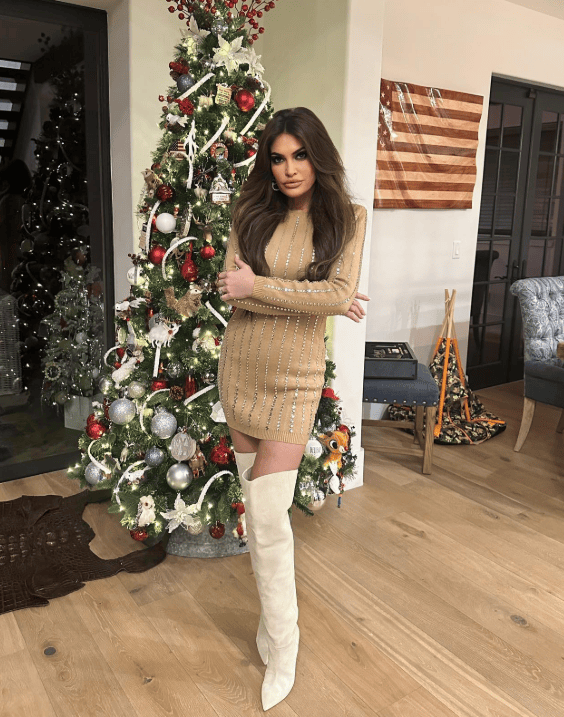
None of this began as a political wardrobe. And yet, to many like my friend, the style has started to feel culturally adjacent to certain conservative personalities. Commentators often point to figures like Lara Trump or Tomi Lahren — women whose polished, conventionally affluent aesthetic fits easily within the quiet-luxury vocabulary. Even male figures such as Donald Trump Jr. often present themselves in the same kind of neutral tailoring and understated wealth cues.
But does that mean that these people had a political motivated wardrobe? Surely it’s more likely that the association emerged afterward.
It reminded me of the work of German sociologist Georg Simmel. More than a century ago, Simmel described fashion as a social process driven by two opposing impulses: imitation and differentiation. People adopt styles both to belong to a group, but also to distinguish themselves from other groups. As one generation embraces a look, another abandons it in search of something new.

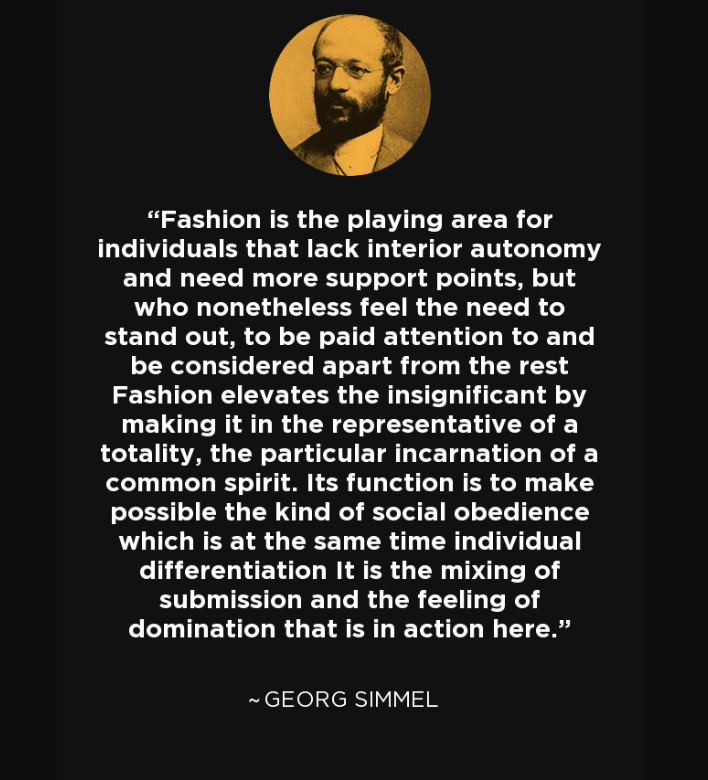
Once you start thinking about fashion that way, the politics of style begins to look different, and my friend’s observation no longer seems bizarre. The quiet-luxury aesthetic may feel politically coded today not because conservatives consciously adopted it, but because younger cultural groups increasingly rejected the visual language it represents.
Consider the broader cultural moment. Over the past decade, fashion among younger consumers has leaned toward irony, experimentation, and visible references: vintage sportswear, thrifted pieces, playful silhouettes, overt branding. In that context, the calm restraint of quiet luxury can read as the aesthetic of an older establishment: stable, affluent, orderly.
In reality, it’s politics that follows perception rather than the other way. If an aesthetic comes to represent the cultural establishment, it can easily become associated with the political forces people imagine occupying that establishment — even if the garments themselves were never meant to signal ideology.
The American sociologist Herbert Blumer described something similar when he argued that fashion spreads through what he called “collective selection.” Styles don’t simply ‘trickle down’ from elites; they emerge when groups converge on looks that feel appropriate to a particular social moment. In other words, fashion reflects a mood before it reflects a political program.
Once that mood hardens into identity, clothing becomes shorthand.
We’ve seen this pattern many times before. The black leather jacket became a symbol of rebellious youth culture long after it was simply outerwear. The yellow vest in France transformed from roadside safety gear into the emblem of a protest movement. Even the now-famous red baseball cap associated with Donald Trump’s campaigns began life as an ordinary campaign accessory before becoming one of the most recognizable political symbols in modern American culture.
In each case, the garment didn’t begin as ideology. It was only once enough people agreed that it represented something larger that the red had crossed from concrete practicality to abstract ideology.
That’s why the idea of a “MAGA aesthetic” is both misleading and revealing. Misleading because political movements rarely possess coherent fashion identities. Republican women didn’t wake up one day decide that beige would be the official color of MAGA. If anything, my friend’s association just shows how quickly clothing becomes a canvas onto which we project and affirm our cultural divisions.
The reality is that most clothes are politically neutral objects. A camel coat or cashmere sweater carries no inherent ideological value of its own. Yet when particular groups appear to favor certain aesthetics—whether through class, generational taste, or media portrayal — those clothes start to accumulate symbolic meaning.
By the time we notice the pattern, it can feel as though the fashion itself was always political.
In truth, the politics usually arrive later.
So the more interesting question to me isn’t whether politics shapes fashion or whether certain styles ‘correlate’ with partisanship – it’s about when fashion stops being simply beautiful, practical, and useful — and starts becoming symbolic.


